Automated Personalization is one of my favorite tools in Adobe Target. There is one nuance, though, when you wish to use custom code to define the experiences used by the models or for random distribution. This video outlines a quick workaround.
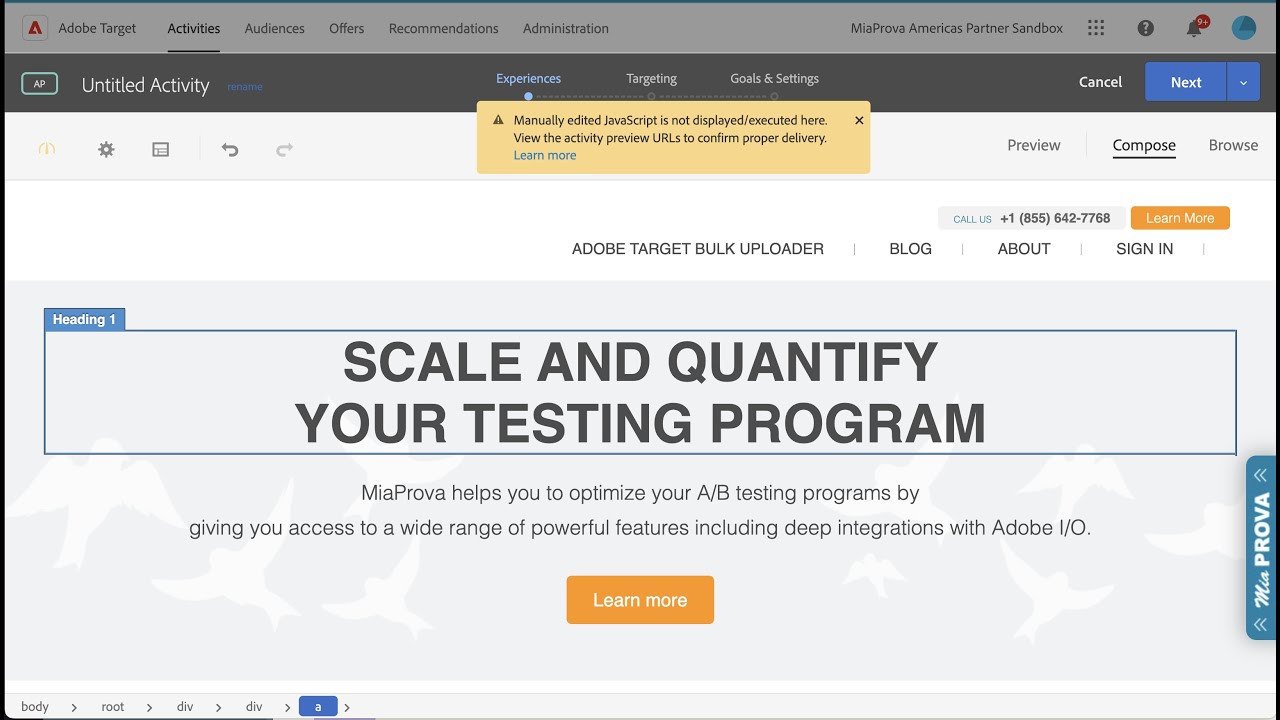
In this video, the speaker talks about using custom code in automated personalization activities within Adobe Target. They explain that while the visual editor in Adobe Target allows for modifications, adding custom code is not an option in creating an automated personalization activity. The workaround suggested is to grab something static on the page and add custom code to it, while ensuring that the source code of the image is maintained. The speaker emphasizes the usefulness of custom code in automated personalization and suggests this workaround for situations where it is needed.
Transcript: (00:00) okay so this is a pretty quick video I’m putting together because uh it’s come up a lot recently uh regarding using custom code in automated personalization activities so um I’ll just kind of show in the details here so a little bit of background uh at analytics demystified I help a lot of companies with the use of automated personalization uh Mia Prova there’s tons of companies using automated personalization where we do different things well anyways um I had a interesting situation come up like I said quite a few times where you (00:34) wanted to inject custom code and I’ll show you where this comes in so using the visual editor in Adobe Target you have the ability to modify things as you wish really powerful to do different things I use it as often as I can to do what I need to do to set up tasks but there are situations especially being a little bit more technical where I need to add in inject custom code which I do over here very very helpful to do for all sorts of different things if you’re doing kind of like a blended server-side (01:04) client-side thing setting a cookie you know setting something to the data layer really really cool stuff uh and helpful but that option is not available in um creating an automated personalization activity I’ll show you what I’ve been here and the reason why is because the visual editor or automated personalization needs to know and coordinate when you’re used when you’re making modifications in more than one area of real estate so if you’re modifying something here you know you would just you know modify make the (01:41) modification uh hello world and let’s say you wanted to add in another offer you would edit the content added another one you would say hello world two and it works it’s really good and effective and especially if you want to control content across different zones or different areas of real estate um but if you’re not or if you can manage that offline on your own there’s no ability to inject custom code so in this particular client they’re introducing new overlays to the site and so they just want a nice easy way to inject (02:28) custom code and so the workaround is this grab something on the page so basically get rid of this location and so you’re going to come in grab something that is static that won’t change that is available on the site and we’ll be there every every time and so here you got the home page reference to our image and then you would add in your JavaScript here to do you know whatever you’re doing and then just keep adding text HTML offers but always maintain the source code of the imagery otherwise what will (03:09) happen is if you replace it with let’s say just JavaScript here to do your thing um oh the log to do you will end up overriding your image and so if that variant were to come up so you always want to maintain that image anyways quick video I thought that’d be helpful especially when using custom coded automated personalization which is very very helpful take care
Optimization Management is so much more than managing the intake and output of tests. A true Optimization Management Platform enables the organization to monitor tests or groups of tests and answers the big questions about their testing program as a whole and their investments in resources and technologies. MiaProva automatically stitches the organizational meta-data related…
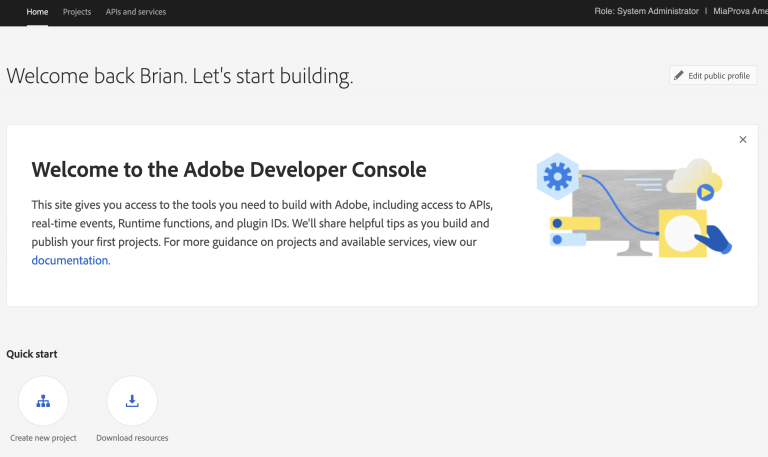
Adobe I/O is Adobe’s developer ecosystem where Adobe makes available its APIs for all of its many products. MiaProva makes very strategic use of the APIs for both Adobe Target as well as Adobe Analytics within Adobe I/O. Adobe I/O allows MiaProva to manage any and all Activities and Activity Types as well as Recommendations….
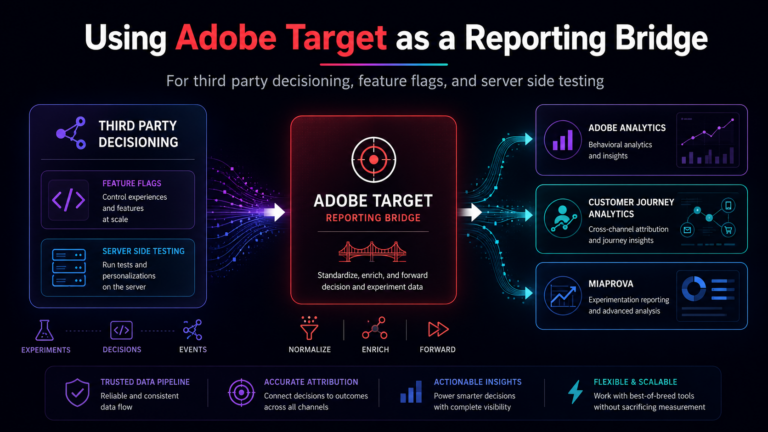
One of the harder parts of experimentation reporting is not the decisioning itself. It is getting the decisioning data into the reporting layer in a way that survives real world complexity. A MiaProva customer recently ran into this exact issue. They had recently added a third-party content decisioning and feature flagging platform to their stack….
MiaProva built this free utility to allow organizations to quickly and easily upload data to Adobe Target for targeting and personalization services. This video also explains how Adobe Target enables users to use the visitor ID Adobe Target provides and how to leverage your own internal definition of the visitor ID.
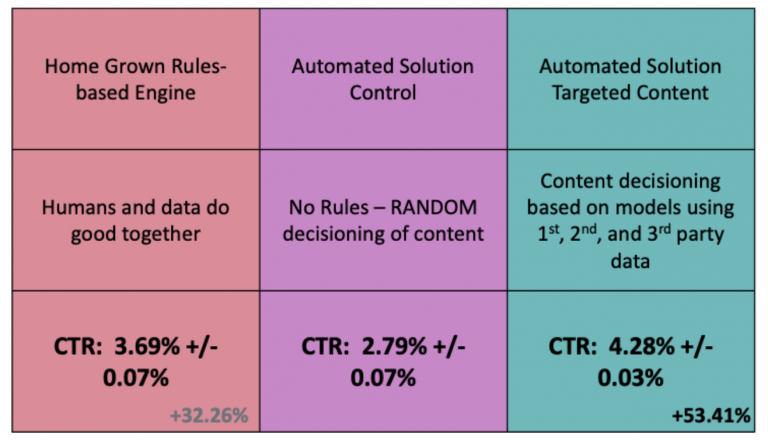
I have long been a big fan of Automated Personalization (AP) in Adobe Target. One of the critical features to extract as much value from it as possible is Report Groups for offers used in AP.
Report Groups allow you to folder or bucket similar offer themes. One client of mine recently took my advice to do this exercise and, since doing so, has realized a 28% lift with the targeted group vs. control by raising the conversion lift to 9% from 7%